
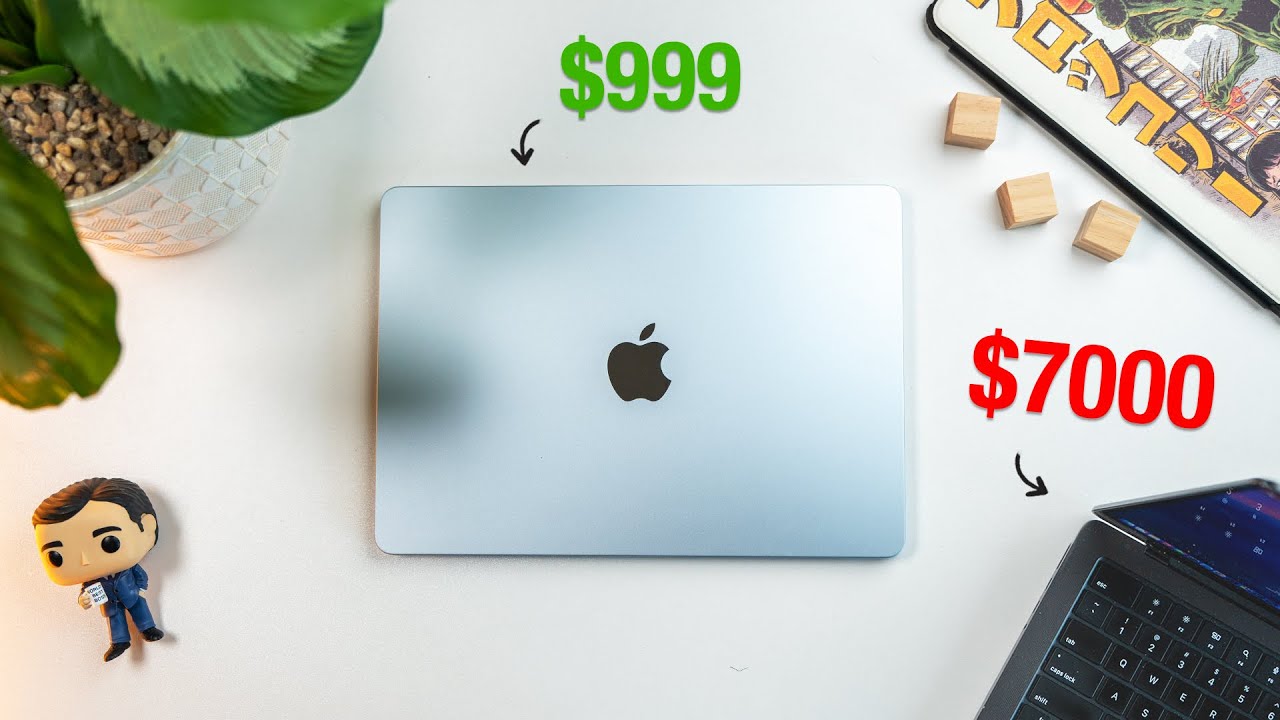
Few laptops hold their value the way MacBooks do. While a typical Windows ultrabook loses 60-70% of its value within three years, M-series MacBooks depreciate at roughly 15-20% per year, a meaningful difference when you’re trying to get real money back from a device you paid over $1,000 for. But not every MacBook depreciates at the same pace, and the gap between generations has widened considerably in 2026.
This guide breaks down the current resale value for every MacBook model from M1 through M4, Air and Pro, and explains exactly what separates a strong payout from a disappointing one.
MacBook resale value in 2026 is almost entirely driven by chip generation, RAM configuration, and battery health. M4 models retain 55-70% of original retail price; M1 models have dropped to roughly 30-45% but remain sellable. Intel MacBooks have minimal secondary market value.
What Drives MacBook Resale Value in 2026
Before getting into specific model pricing, it helps to understand the variables that buyers actually weigh when they decide what to pay. Chip generation sits at the top of the list. Each Apple Silicon generation step, M1 to M2, M2 to M3, M3 to M4, typically adds $150-$300 to resale value for otherwise identical configurations. That’s not a small number when you’re comparing models side by side.
RAM has become a bigger factor than it used to be. Because Apple Silicon memory is soldered and can’t be upgraded after purchase, buyers are extremely attentive to configuration details. A 16GB MacBook consistently commands $80-$150 more than the 8GB version of the same model. The gap grows wider at 32GB and 64GB, especially on MacBook Pro. In 2026, 8GB models are facing faster depreciation as AI workloads and heavier software make that configuration feel constrained.
Battery health is the third major variable. A MacBook showing 90% or better battery health fetches full market value. Drop below 80%, the threshold where macOS displays “Service Recommended”, and most buyback services will deduct $150-$200 from their offer to account for the replacement cost. Buyers know to check battery health before paying, and they do.
Storage tier, physical condition, and whether the original charger is included round out the picture. Missing the Apple-branded charger typically reduces your offer by $20-$40. A cracked screen, damaged hinge, or keyboard wear will affect your condition grade and corresponding payout.
MacBook Air Resale Value: M1 Through M4
The MacBook Air is Apple’s best-selling laptop, and its popularity in the used market is just as strong as in the new market. High buyer demand means reasonably liquid resale across all generations, though the spread between M1 and M4 is now significant.
MacBook Air M1 (2020): The M1 Air launched the Apple Silicon era and remains a capable machine for everyday use, but it’s now five-plus years old and the slowest depreciation phase has ended. Well-maintained units with 8GB RAM and 256GB storage are selling in the $250-$380 range in 2026. Configurations with 16GB RAM and 512GB storage push toward $480-$650. The M1 Air still runs macOS 27 fully, Apple has confirmed that all M-series chips are supported in the current software cycle, which keeps buyer interest alive. That said, values are declining by an estimated $10-$15 per month, and this model won’t receive software support indefinitely. If you own one, selling sooner rather than later preserves more of its remaining value.
MacBook Air M2 (2022–2023): The M2 Air introduced the redesigned flat-edge chassis that Apple carried forward through M4, which helps it look current in a buyer’s hands rather than dated. Base 8GB/256GB configurations are trading at $350-$550; the 16GB variants reach $650-$800. The 15-inch M2 Air commands a consistent premium over the 13-inch across comparable specs. The M2 generation represents the secondary market’s value tier, fast enough for professional workloads, modern-looking, and priced attractively for buyers who don’t need the latest chip.
MacBook Air M3 (2024): The M3 Air is currently the used market’s sweet spot. It’s only one generation behind the latest hardware, macOS support runs deep into the decade, and buyers recognize it as a genuinely current machine. A 13-inch M3 Air with 8GB and 256GB sells for approximately $450-$620 in good condition. The 15-inch version commands $550-$750. Upgraded configurations with 16GB RAM, the configuration buyers in 2026 actively seek, push values to $700-$950. The jump from M2 to M3 Air 13-inch is worth roughly $140 in resale value, a 29% premium for one generation of improvement.
MacBook Air M4 (2025): The current-generation Air holds the strongest resale position. A base 13-inch M4 Air with 16GB RAM and 256GB storage sells for $700-$850. The 15-inch M4 Air tops out around $950-$1,047 for well-specified configurations. These machines were only released in early 2025, and demand from buyers who want current-generation hardware without paying new retail prices keeps offers strong. M4 Airs lose roughly 15% of their value in the first year, so owners planning to upgrade soon should move before that depreciation accelerates.
Before getting a quote, check your MacBook’s battery cycle count: go to Apple Menu → About This Mac → System Report → Power, and look for “Cycle Count” under Battery Information. Under 300 cycles is excellent. 300–500 is good. Over 800 will reduce your offer. Knowing this number before you submit a quote request helps you set realistic expectations and avoid surprises after inspection.
MacBook Pro Resale Value: M1 Through M4
MacBook Pro holds value better at the top end of the lineup than almost any other laptop on the secondary market, particularly in Pro and Max chip configurations. The professional buyer base, video editors, developers, audio engineers, shops on specifications and pays premium prices for the right machine.
MacBook Pro M1 (13-inch, 2020) / M1 Pro and M1 Max (14-inch and 16-inch, 2021): The base 13-inch M1 Pro sells for $500-$700 in good condition. The 14-inch and 16-inch models with M1 Pro and M1 Max chips tell a different story: the 2021 redesign brought back MagSafe, HDMI, an SD card slot, and the ProMotion display, features buyers actively want. M1 Pro 14-inch models in good condition fetch $900-$1,200; M1 Max 16-inch models hold $1,100-$1,400. That’s strong retention for hardware that’s nearly five years old.
MacBook Pro M2 (13-inch, 2022 / 14-inch and 16-inch, 2023): The 13-inch M2 Pro was the last MacBook with a Touch Bar, which gives it a minor collector interest but also marks it as an awkward product between the Air and the proper Pro. It sells for around $500-$700 in good condition. The 14-inch and 16-inch M2 Pro and M2 Max models perform significantly better: a 14-inch M2 Pro with 16GB RAM currently sells for $1,200-$1,450, and 16-inch M2 Max configurations sit at $1,600-$1,900. These machines handle demanding professional workloads without any throttling and have 2–3 years of full macOS support ahead, which sustains buyer demand.
MacBook Pro M3 (14-inch and 16-inch, 2023): The M3 Pro marked a meaningful performance jump and the used market reflects it. A 14-inch M3 Pro with 18GB RAM and 512GB storage, originally priced at $1,999, currently sells for $1,450-$1,650. The 16-inch M3 Max models are particularly sought after among creative professionals, holding 75–80% of their original retail value, an exceptional retention rate. If you own a well-specified M3 MacBook Pro, you’re in a strong position to sell it for meaningful cash right now before the next generation push softens demand further.
MacBook Pro M4 (14-inch and 16-inch, 2024): The current generation commands the strongest prices. A base 14-inch M4 MacBook Pro that retailed for $1,599 currently fetches approximately $1,350-$1,450 on the secondary market. Configured M4 Pro and M4 Max models hold 88-90% of their original retail price, extraordinary retention that reflects genuine buyer demand from professionals who want the most capable Apple Silicon available. Apple Intelligence support runs best on M4 hardware, which is keeping M4 values unusually elevated relative to the normal generational drop.
MacBook Resale Value by Model, Quick Reference (2026)
- MacBook Air M1: $250-$650 (8GB–16GB, condition-dependent)
- MacBook Air M2: $350-$800 (13-inch and 15-inch, condition-dependent)
- MacBook Air M3: $450-$950 (13-inch and 15-inch, 16GB configs at high end)
- MacBook Air M4: $700-$1,047 (current generation, 16GB+ preferred)
- MacBook Pro 13″ M1: $500-$700
- MacBook Pro 14″/16″ M1 Pro/Max: $900-$1,400
- MacBook Pro 13″ M2: $500-$700
- MacBook Pro 14″/16″ M2 Pro/Max: $1,200-$1,900
- MacBook Pro 14″/16″ M3 Pro/Max: $1,450-$2,600
- MacBook Pro 14″/16″ M4 / M4 Pro/Max: $1,350-$3,200
Prices reflect good-to-excellent condition with adequate battery health. Your exact figure will move based on RAM, storage, cycle count, and physical wear.
Does MacBook Air or MacBook Pro Hold Value Better?
At the high-end configurations, MacBook Pro wins decisively. A 16-inch M3 Max retaining 75–80% of its original retail price outperforms nearly every other laptop in existence. At the entry level, however, the MacBook Air typically holds a higher percentage of its original price than the base MacBook Pro at the same generation, partly because the Air’s lower starting price means buyers are closer to the original purchase cost when they compare used options.
For sellers deciding which model to upgrade from: if you have a well-configured MacBook Pro with a Pro or Max chip, the secondary market is genuinely rewarding. If you have a base M1 or M2 Air and are debating whether it’s worth selling, the answer is still yes, but the window is finite and narrowing as newer hardware continues to push older models further down the pricing curve.
Intel MacBooks: What’s Left in 2026
Intel MacBooks have lost most of their secondary market standing. With macOS Tahoe confirming that Intel support ends at the current major version, buyers looking for any kind of long-term usability have largely moved away from pre-2020 Intel machines. A 2019 Intel MacBook Pro might still fetch $150-$300 in excellent condition depending on configuration, but values are declining steeply. If you’re holding an Intel MacBook, selling now captures more value than waiting another year.
How to Know Exactly What Your MacBook Is Worth
Model numbers and chip generations tell you the range; your specific machine’s RAM, storage, battery health, and condition determine where within that range your offer falls. The fastest way to find out is to get an instant quote, iGadgets Buy buys MacBooks across all Apple Silicon generations and handles everything with a prepaid shipping label and payment within 24 hours of inspection. You can get a quote for your MacBook here, and if you’re selling other devices at the same time, the process works across phones, tablets, and more through a single sell any gadget flow. For the full picture of how to maximize what you receive, the complete guide to selling your MacBook for maximum value covers timing, preparation, and platform selection in detail.
MacBook resale value by model, M1 through M4, rewards sellers who move strategically. The best payout comes from selling before the next chip generation announcement, ensuring your battery health is documented above 80%, and choosing a platform that pays market rate rather than a lowball trade-in credit.
Frequently Asked Questions
How much is a MacBook Air M1 worth in 2026?
A MacBook Air M1 with 8GB RAM in good condition is worth approximately $250-$380. The 16GB/512GB configuration reaches $480-$650. Values are declining steadily as the M1 ages, so selling sooner preserves more value than waiting.
Does RAM affect MacBook resale value?
Significantly. A MacBook with 16GB unified memory consistently sells for $80-$150 more than the same model with 8GB, because RAM cannot be upgraded after purchase and buyers are increasingly aware that 8GB is a limiting configuration for modern workloads.
Is a MacBook M3 still worth selling in 2026?
Yes, and it’s one of the stronger positions in the current used market. M3 MacBook Air models are fetching $450-$950 depending on configuration and condition. M3 Pro and M3 Max MacBook Pro models hold 75–80% of original retail, which is exceptional retention for a two-year-old laptop.
Does battery health affect MacBook resale price?
Directly. A MacBook with 90%+ battery health commands full market value. Below 80%, where macOS shows “Service Recommended”, most buyback services deduct $150-$200 from the offer. Battery cycle count under 300 is the best selling position; over 800 will reduce your payout noticeably.
Are Intel MacBooks still worth selling?
Yes, but the window is narrowing. A 2019 Intel MacBook Pro in excellent condition may still fetch $150-$300 depending on configuration, but values are falling as macOS support ends for Intel hardware. Selling now captures more cash than waiting another year.
How much more is a MacBook Pro worth than a MacBook Air of the same generation?
At base configurations, the difference is modest, $100-$200 at most. Where MacBook Pro separates itself sharply is in Pro and Max chip configurations, which appeal to creative professionals and command prices $400-$1,000 above equivalent Air models. If you have an M3 or M4 MacBook Pro with a Pro or Max chip, expect significantly stronger resale interest than an Air owner at the same generation.